


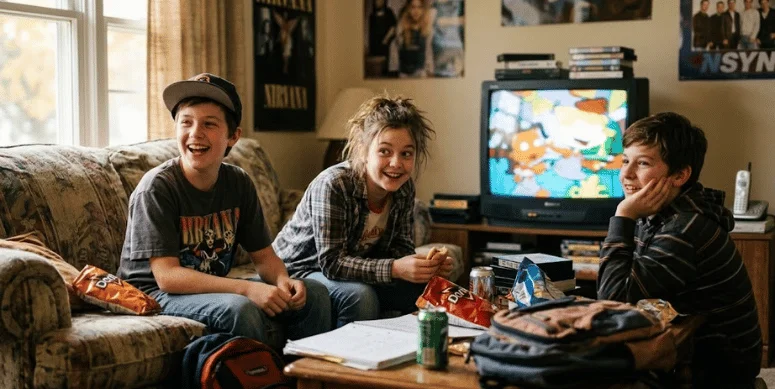
For millions of American kids, after-school TV meant animated adventures, strange characters, and unforgettable theme songs. Cartoons from the 90s and early 2000s crossed comedy, action, fantasy, superheroes, and everyday childhood stories. Many remain recognizable because their characters and storytelling worked beyond their original audiences.
Quick answer: The era produced favorites such as Rugrats, Hey Arnold!, Dexter’s Laboratory, The Powerpuff Girls, SpongeBob SquarePants, and Samurai Jack. Nickelodeon, Cartoon Network, Disney, Kids’ WB, and Fox Kids helped shape American viewing habits. Several series remain available through reruns, streaming, reboots, and franchise revivals.
| Era | Standout shows | Major U.S. outlets | What defined the period |
|---|---|---|---|
| Early 1990s | Rugrats, Doug, Animaniacs | Nickelodeon, Fox, syndication | Creator-driven comedy and distinctive characters |
| Late 1990s | Hey Arnold!, Dexter’s Laboratory, Recess | Nickelodeon, Cartoon Network, ABC/Disney | Bigger original-animation lineups |
| 1999–2002 | SpongeBob, Courage, Ed, Edd n Eddy | Nickelodeon, Cartoon Network | Surreal humor and strong visual identities |
| Early 2000s | Samurai Jack, Kim Possible, Teen Titans | Cartoon Network, Disney | Action, serialized stories, and sharper style |
| Mid-2000s bridge | Avatar, Foster’s Home, Ben 10 | Nickelodeon, Cartoon Network | Longer stories and broader family appeal |
Why This Era of Animation Still Feels Different
During this period, American children suddenly had more places to find original animated programming. Nickelodeon launched Doug, Rugrats, and The Ren & Stimpy Show as its first Nicktoons in 1991. That expansion helped establish original animation as central to the network’s identity.
Other channels soon built identities around their own characters, humor, and visual styles. Cartoon Network became associated with shows like Dexter’s Laboratory and The Powerpuff Girls. Disney also offered memorable series, including Recess, which Disney lists as a 1997 release.
The result was an unusually varied period for young viewers in the United States. One afternoon could include superheroes, talking animals, schoolyard politics, or surreal comedy. That variety helps explain why people still search for these programs decades later.
Key Takeaways
* Nickelodeon helped popularize creator-driven Nicktoons during the 1990s. * Cartoon Network built a recognizable identity through original Cartoon Cartoons. * Disney mixed school stories, action, comedy, and adventure. * Superhero animation became a major part of children’s television. * Anime exposure also expanded for many American viewers. * Several late-1990s series continued strongly into the following decade.
Best Cartoons From the 90s and Early 2000s to Remember
Rugrats
Rugrats turned ordinary childhood experiences into enormous adventures through a toddler’s imagination. Tommy, Chuckie, Angelica, Phil, and Lil became signature Nickelodeon characters. The original series launched in August 1991 and eventually ran for nine seasons.
The series also worked because adults and children could interpret situations differently. Parents understood jokes that younger viewers often missed. That layered writing gave episodes more replay value as the original audience grew older.
Hey Arnold!
Hey Arnold! followed children growing up in a dense urban neighborhood filled with unusual personalities. Arnold often acted as the calm center of complicated friendships and family problems. The series mixed humor with stories about loneliness, empathy, school pressure, and growing up.
Helga became especially memorable because her tough behavior concealed a far more complicated personality. Side characters also received episodes with meaningful stories of their own. That made the fictional neighborhood feel unusually complete for a children’s program.
Dexter’s Laboratory
Dexter had a secret laboratory, a dramatic accent, and a sister who constantly ruined his plans. That simple setup created countless science-fiction jokes and escalating disasters. The bold visual style remains instantly recognizable today.
The series also helped define Cartoon Network’s original-programming identity during the late 1990s. Its humor could be absurd without becoming difficult for younger viewers to follow. Dee Dee’s interruptions usually ensured Dexter’s brilliant plans ended badly.
The Powerpuff Girls
Blossom, Bubbles, and Buttercup combined kindergarten problems with battles against enormous villains. Their personalities created a natural balance of leadership, optimism, and aggression. Mojo Jojo became one of the era’s most recognizable animated villains.
The show also blended cute designs with action scenes and strange humor. That contrast helped it attract viewers beyond a narrow demographic. Townsville could move from ordinary school problems to monster attacks within minutes.
Animaniacs
Animaniacs built episodes around fast jokes, musical segments, parody, and frequent format changes. Yakko, Wakko, and Dot acted as the chaotic center of the series. Pinky and the Brain became popular enough to support their own adventures.
Its humor regularly referenced movies, celebrities, history, and entertainment culture. Younger audiences could enjoy the physical comedy without understanding every reference. Older viewers often discovered new jokes when revisiting episodes years later.
Batman: The Animated Series
This version of Batman brought a darker tone to weekday and Saturday animation. Gotham City had a distinctive visual identity inspired by noir films and Art Deco design. The stories often treated villains as complex characters rather than simple obstacles.
The series also showed that children’s superhero programming could support serious emotional themes. Episodes explored loss, responsibility, identity, and difficult moral choices. Its influence remains visible across later Batman adaptations and superhero animation.
X-Men: The Animated Series
The animated X-Men introduced many young viewers to Marvel’s mutant heroes. Wolverine, Cyclops, Storm, Jean Grey, and Rogue faced threats that often extended across several episodes. The show made serialized superhero storytelling accessible to Saturday morning audiences.
Its stories also used prejudice and exclusion as recurring themes. That gave many conflicts more weight than a simple hero-versus-villain structure. The famous opening sequence remains closely associated with the franchise’s popularity in the 1990s.
Recess
Recess treated an elementary school playground like a functioning society. Students had rules, groups, traditions, leaders, and disputes that adults barely understood. T.J. Detweiler and his friends regularly challenged unfair rules while protecting their free time.
Disney dates the series to 1997, placing it firmly within the late-1990s animation boom. Its school setting also makes many stories easy for adults to remember. Playground politics often felt enormous when you were the same age as the characters.
Pokémon
Pokémon became much more than another television show for American children. The animated series connected with trading cards, video games, toys, and schoolyard conversations. Ash and Pikachu became recognizable even among people who rarely followed the franchise closely.
The show also arrived as Japanese animation was becoming more visible to mainstream American children. Its adventure structure made it easy to introduce new creatures and locations. Each episode could feel self-contained while supporting a larger journey.
SpongeBob SquarePants

Few series bridge the two eras as well as SpongeBob SquarePants. Nickelodeon states that the series premiered on July 17, 1999. It quickly became one of the company’s most durable entertainment properties.
SpongeBob’s optimism works against Squidward’s frustration, Patrick’s confusion, and Mr. Krabs’ obsession with money. These contrasting personalities created jokes that appealed to several age groups. The series later became a major source of internet memes and reaction images.
Courage the Cowardly Dog
Courage the Cowardly Dog mixed comedy with imagery that could become surprisingly frightening. Courage lived with Muriel and Eustace in an isolated farmhouse surrounded by bizarre threats. He was constantly terrified but still tried to protect his family.
The program stood apart because it never limited itself to one type of monster. Episodes drew on horror, science fiction, folklore, and surreal art. That unpredictability made the series difficult to confuse with anything else.
Ed, Edd n Eddy
Three friends spent their days coming up with questionable plans to earn money for jawbreakers. Their schemes usually collapsed because of greed, misunderstanding, or terrible timing. The neighborhood setting gave the show a simple structure without limiting its comedy.
Each Ed also had a clearly different personality. Ed was enthusiastic, Edd was cautious, and Eddy constantly chased status. Their chemistry carried stories that often involved little more than bored children creating their own trouble.
Samurai Jack
Samurai Jack looked and moved differently from many American television cartoons around it. Long sections could rely on movement, framing, and music instead of constant dialogue. Jack’s fight against Aku also gave the series a clear continuing goal.
The action drew from samurai films, science fiction, fantasy, and westerns. Episodes could switch between quiet visual storytelling and elaborate battles. That cinematic approach helped the series appeal to viewers who had outgrown simpler children’s comedy.
Kim Possible
Kim Possible balanced school responsibilities with missions involving supervillains and international threats. Ron Stoppable supplied comedy while Kim handled danger with unusual confidence. Their friendship became as important as the weekly action.
The series also gave Disney a strong action-comedy heroine during the early 2000s. Kim could save the world and still worry about homework or social problems. That combination kept the stories connected to ordinary teenage experiences.
Teen Titans
Teen Titans paired superhero action with comedy and character-focused drama. Robin, Raven, Starfire, Cyborg, and Beast Boy had distinct personalities that frequently clashed. Their relationships often mattered as much as the villains they fought.
The series could change tone quickly without losing its identity. One episode might feature an absurd comedy plot, while another centered on betrayal or fear. That range helped create a devoted audience beyond its original run.
Avatar: The Last Airbender
Avatar: The Last Airbender arrived slightly later than several titles on this list. Still, it grew directly from the creative momentum of early-2000s television animation. Aang’s journey followed a carefully planned world, with continuing storylines and meaningful character development.
The series gave major characters clear emotional arcs across multiple seasons. Zuko’s shifting loyalties became central to the larger story. Its structure showed how ambitious serialized storytelling could succeed with younger American audiences.
Nickelodeon, Cartoon Network, or Disney: Which Shows Did You Watch?
Nickelodeon’s lineup leaned heavily on distinctive personalities and creator-driven comedy. Rugrats, Hey Arnold!, and later SpongeBob became central parts of its identity. The network’s 1991 Nicktoons launch was especially important for its original-animation strategy.
Cartoon Network often offered stranger visual experiments and action-oriented programming. Dexter’s Laboratory, Courage, The Powerpuff Girls, and Samurai Jack showed that range. Its programming gave American viewers comedy, superheroes, fantasy, and stylized action in the same era.
Disney frequently placed extraordinary adventures beside recognizable school or family experiences. Recess made playground politics feel serious, while Kim Possible mixed teenage life with spy missions. Readers looking for more TV recommendations can also browse Magazinted’s entertainment coverage and streaming guides.
Why Adults Still Rewatch These Shows
Nostalgia matters, but familiarity alone doesn’t explain every rewatch. Many series had strong character writing, memorable visual direction, and jokes that work differently for adults. Childhood memories can add another layer without carrying the entire experience.
The old viewing routine also matters to many American viewers. Episodes were tied to after-school schedules, weekend mornings, VHS tapes, and conversations with friends. Streaming offers more control, but it cannot completely reproduce that shared television schedule.
Animation from this period also had remarkable stylistic variety. A viewer could immediately distinguish Rugrats from Batman or Samurai Jack. Strong visual identities made those programs easier to remember decades later.
Where Can You Watch These Old Animated Shows Today?
Streaming availability changes frequently because licensing agreements move between platforms. Search major U.S. streaming services before assuming an older listing is still accurate. Digital purchases and official network platforms may provide additional options.
Physical media also remains useful for series that move between streaming catalogs. DVD collections can preserve episodes without depending on monthly licensing changes. Used-media stores and library systems may carry older releases that are difficult to stream.
Fans interested in how children’s entertainment has changed can compare television with modern digital products. Magazinted also covers children’s app design ideas, including animation, sound, interfaces, and younger audiences. The comparison shows how entertainment habits have shifted from scheduled television toward interactive screens.
Frequently Asked Questions
What were the most popular cartoons from the 90s and early 2000s?
Frequently remembered titles include Rugrats, Hey Arnold!, The Powerpuff Girls, Dexter’s Laboratory, and SpongeBob SquarePants. Action fans may remember Batman, X-Men, Samurai Jack, and Teen Titans. Personal favorites often depend on which networks a household received.
What cartoons did 90s kids watch in America?
American viewers had programming from Nickelodeon, Cartoon Network, Disney, Fox Kids, Kids’ WB, PBS, and syndicated stations. Popular choices ranged from Animaniacs and Pokémon to Rugrats and Recess. Cable availability also varied by household and region.
Which Nickelodeon animated shows defined the 1990s?
Doug, Rugrats, and The Ren & Stimpy Show launched together as Nickelodeon’s first Nicktoons in 1991. Later hits included Rocko’s Modern Life, Hey Arnold!, and CatDog. SpongeBob SquarePants arrived in 1999 and bridged the 1990s and 2000s.
Which early-2000s series are worth rewatching as an adult?
Samurai Jack, Teen Titans, and Avatar offer substantial action and character development. SpongeBob and Courage contain humor and details adults may notice differently. The right choice depends on whether you want comedy, nostalgia, superheroes, or longer stories.
A Generation of Animated TV Worth Revisiting
These shows lasted because they rarely felt interchangeable. Each network developed memorable characters, visual identities, and storytelling styles viewers could recognize at a glance. Their influence continued through reboots, streaming libraries, memes, merchandise, and new adaptations.
Start with the program you remember rushing home to watch. Then try one you missed because another network had your attention. The era is large enough to make a second childhood watchlist surprisingly easy to build.
