


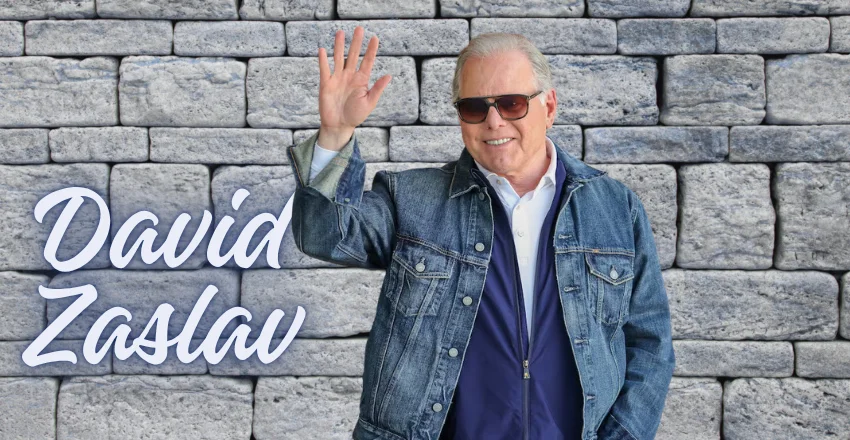
David Zaslav is an American media executive best known for leading Warner Bros. Discovery. His career spans law, cable television, streaming, corporate acquisitions, and major entertainment brands. In 2026, his leadership remains especially relevant because Warner Bros. Discovery is involved in a major transaction with Paramount Skydance.
The executive has spent decades helping shape American television and entertainment businesses. His record includes senior roles at NBC, leadership of Discovery, and the creation of Warner Bros. Discovery. His compensation, corporate strategy, and handling of major media assets have also drawn close attention.
David Zaslav at a Glance
| Fact | Details |
|---|---|
| Full name | David M. Zaslav |
| Born | January 15, 1960 |
| Age in 2026 | 66 |
| Birthplace | New York City, New York |
| Nationality | American |
| Education | Binghamton University; Boston University School of Law |
| Profession | Media executive |
| Known for | Warner Bros. Discovery and Discovery leadership |
| Spouse | Pam Zaslav |
| Children | Three |
| 2025 reported compensation | About $165 million |
| Major 2026 development | Pending Paramount acquisition of Warner Bros. Discovery |
Direct answer: David Zaslav is a longtime American media executive and the president and CEO of Warner Bros. Discovery. He previously led Discovery and held senior positions at NBC. His career includes major cable, streaming, and entertainment deals, while his 2025 compensation reached about $165 million.
Who Is David Zaslav?
David Zaslav built his career as American television shifted from traditional cable to streaming. He first trained as a lawyer before moving into media management. That combination of legal training and business experience later proved valuable in major corporate transactions.
He became particularly prominent while running Discovery. During his tenure, the company expanded its collection of television brands and strengthened its international presence. His profile grew further when Discovery combined with WarnerMedia in 2022.
That transaction placed HBO, CNN, Warner Bros., Discovery, HGTV, Food Network, TLC, and other properties within one company. It also put him at the center of debates about streaming economics and media consolidation. Those issues continue to influence the U.S. entertainment business.
Early Life and Education
He was born on January 15, 1960, in New York City. He later attended Binghamton University, where he earned his undergraduate degree. Warner Bros. Discovery’s corporate filings also list Boston University School of Law among his educational credentials.
He graduated from Boston University School of Law with a J.D. and initially practiced law in New York. He also worked at LeBoeuf, Lamb, Leiby & MacRae. He eventually moved from legal practice into the television industry.
That shift proved important for his professional trajectory. Television distribution was becoming a major business as cable networks expanded across the United States. He entered the sector before streaming disrupted many of its traditional business models.
Building a Career at NBC
Before joining Discovery, the future media chief spent years at NBC and NBCUniversal. His responsibilities included cable television and distribution. Warner Bros. Discovery credits him with helping develop CNBC and helping create MSNBC.
His NBC experience gave him exposure to programming, distribution, advertising, and negotiations with cable operators. These areas became central to his later executive positions. He eventually served as president of Cable and Domestic Television and New Media Distribution at NBC Universal.
This period also connected him with the economics behind large television networks. Successful media companies needed recognizable programming and broad distribution. Those principles remained central as he moved into his next leadership role.
How He Transformed Discovery
He became president and CEO of Discovery in January 2007. The company developed a portfolio built around nonfiction, lifestyle, reality, and factual entertainment. Discovery also became a publicly traded company during his leadership.
The portfolio eventually included brands such as Discovery Channel, Animal Planet, TLC, HGTV, and Food Network. The 2018 acquisition of Scripps Networks Interactive strengthened Discovery’s lifestyle programming. That deal added valuable brands before the industry accelerated its shift toward direct-to-consumer streaming.
Discovery later launched Discovery+, its own streaming service. The move reflected growing pressure from services such as Netflix and Disney+. It also prepared the company for a much larger corporate combination.
Readers interested in other entertainment profiles can explore Magazinted’s featured and entertainment coverage. The site also covers streaming entertainment, including its guide to romantic Korean dramas on Netflix.
David Zaslav and Warner Bros. Discovery
The WarnerMedia and Discovery transaction closed on April 8, 2022. The combination created Warner Bros. Discovery and brought several major entertainment businesses under one corporate structure. He became president and CEO of the combined company.
The new business inherited well-known properties across movies, television, news, sports, and streaming. Warner Bros., HBO, CNN, DC, Discovery, Food Network, and HGTV became parts of the same corporate group. Managing that collection required balancing traditional television revenue with investment in streaming.
The company also faced substantial debt after the merger. Management focused heavily on cost reductions, cash flow, and restructuring. Some decisions generated criticism from creators, employees, viewers, and parts of the entertainment industry.
Streaming remained another major priority. HBO Max was initially renamed Max before the company later restored the HBO Max name. The changes reflected continuing efforts to position the service around Warner and HBO programming.
His Salary and 2025 Compensation
Executive pay is one of the most closely watched parts of his public profile. Warner Bros. Discovery reported total 2025 compensation of approximately $165 million for its CEO. That figure should not be confused with annual salary or personal net worth.
His base salary remained $3 million, according to company disclosures. The much larger total included incentive compensation, stock-related awards, options, and other compensation. WBD said a one-time stock-option grant connected with his 2025 employment agreement contributed significantly to the total.
Without that one-time grant, the company reported that his annual compensation would have been about $55.4 million. This distinction provides useful context when comparing 2025 with earlier years. His reported total compensation for 2024 was approximately $51.9 million.
Executive compensation has drawn shareholder scrutiny. Compensation packages can include awards whose eventual value differs from the amount reported when granted. Readers should therefore distinguish salary, reported compensation, realized earnings, and personal wealth.
What Is David Zaslav’s Net Worth?
No authoritative public source establishes his current personal net worth. Celebrity-finance websites sometimes publish estimates, but those figures can rely on assumptions about investments, property, taxes, and private assets. Treating an estimate as confirmed wealth can therefore be misleading.
Public filings offer much stronger evidence about executive compensation. Under securities rules, they disclose salary, incentive awards, stock awards, options, and certain benefits. They don’t provide a complete accounting of an executive’s personal finances.
For that reason, his SEC-reported compensation provides a firmer financial reference than an unsourced wealth estimate. It still doesn’t show how much money he personally keeps. Taxes, investment performance, property, charitable giving, and other private financial decisions affect personal wealth.
Magazinted uses a similar profile format for public figures, including its Sebastian Bach biography and career profile. More information about the publication’s coverage can be found on the Magazinted About page.
Wife and Family
He is married to Pam Zaslav. Public biographical sources report that the couple has three children. Unlike his corporate career, his immediate family’s life remains largely private.
His family information often appears in searches because readers want a broader biography beyond his corporate positions. Still, his public significance comes primarily from his work in television and entertainment. Responsible profiles should separate verified biographical information from speculation about relatives or private finances.
Why His Leadership Has Been Controversial
Leading Warner Bros. Discovery has required difficult choices amid major shifts in the entertainment business. Traditional cable audiences have declined while streaming companies compete for subscribers and advertising. At the same time, producing major films and television programs remains expensive.
Cost reductions following the WarnerMedia combination attracted particular attention. Projects were canceled or removed, operations were reorganized, and jobs were cut. Supporters of the financial strategy have emphasized reducing debt and generating more cash.
Critics have questioned specific content decisions and the effect of restructuring on workers and creative projects. His compensation has also attracted criticism, especially when employees faced cost reductions. These competing views form an important part of understanding his public reputation.
A useful assessment separates those debates from measurable facts. WBD reduced debt after the 2022 transaction while continuing to operate major film, television, and streaming businesses. Whether individual strategic choices created sufficient long-term value remains a question for investors and the market.
The Paramount Deal and What It Means in 2026
A major new chapter emerged in February 2026 when Paramount Skydance announced an agreement to acquire Warner Bros. Discovery. The announced transaction values WBD at an enterprise value of about $110 billion. Paramount agreed to pay $31 per share in cash for outstanding WBD shares.
The deal has gone through an extensive regulatory process. By August 2026, Paramount said it had satisfied required regulatory conditions under the merger agreement across numerous jurisdictions. Legal challenges from a group of U.S. states created another obstacle.
In September 2026, Paramount reached a settlement with California and 11 other states concerning the transaction. The agreement included commitments involving domestic film production, theatrical releases, labor issues, and editorial independence. The settlement removed a significant barrier, although the closing remained pending at the time of writing.
His future position after completion has not been publicly established in a definitive employment agreement. That uncertainty makes the transaction especially important to his biography. It could mark the end of one of the longest major CEO tenures in modern American media.
What His Career Says About the Changing Media Business
His career connects several distinct eras of American media. He worked in cable television when networks such as CNBC and MSNBC were developing. He then led Discovery as it expanded its global cable brands.
The next stage centered on consolidation and streaming. Discovery bought Scripps, launched a streaming service, and combined with WarnerMedia. Warner Bros. Discovery then spent years trying to balance declining linear television with streaming growth and major studio operations.
The proposed Paramount transaction adds another stage: consolidation among legacy Hollywood companies. Streaming services and technology platforms have changed how audiences find entertainment. Traditional media companies have responded through acquisitions, restructuring, and larger content portfolios.
That progression helps explain why his career matters beyond one company. His decisions reflect broader pressures facing U.S. entertainment executives. Distribution technology changed, but valuable films, franchises, sports, news, and television libraries remain central assets.
Frequently Asked Questions About David Zaslav
How old is David Zaslav?
He was born on January 15, 1960, making him 66 years old in 2026. His age is also listed in Warner Bros. Discovery’s 2026 proxy materials. He has spent several decades working in American media and entertainment.
What company does he run?
He serves as president and CEO of Warner Bros. Discovery. He assumed that role when the WarnerMedia and Discovery transaction closed in April 2022. Before that, he led Discovery for more than 15 years.
How much was he paid in 2025?
Warner Bros. Discovery reported approximately $165 million in total CEO compensation for 2025. The figure included a large one-time stock-option grant. His base salary was much smaller at $3 million.
Is his net worth publicly confirmed?
No authoritative filing provides a complete figure for his personal net worth. Public-company filings disclose compensation but don’t provide a complete inventory of private assets and liabilities. Treat online wealth estimates as estimates rather than verified facts.
Is he leaving Warner Bros. Discovery?
His long-term position depends partly on the completion and structure of Paramount’s acquisition of WBD. Public deal disclosures have not established a definitive future employment role for him at the combined company. Readers should check current corporate announcements as the transaction develops.
The Bottom Line
Few modern media executives have participated directly in as many stages of television’s transformation. His path moved from law to NBC, Discovery, streaming, and the WarnerMedia combination. The pending Paramount transaction may become another defining event in that career.
For U.S. readers, his story also offers a window into how Hollywood’s largest companies are changing. Executive compensation, streaming competition, consolidation, and traditional television economics all intersect in his career. Those forces will continue shaping the companies behind American movies, television, news, and streaming services
