


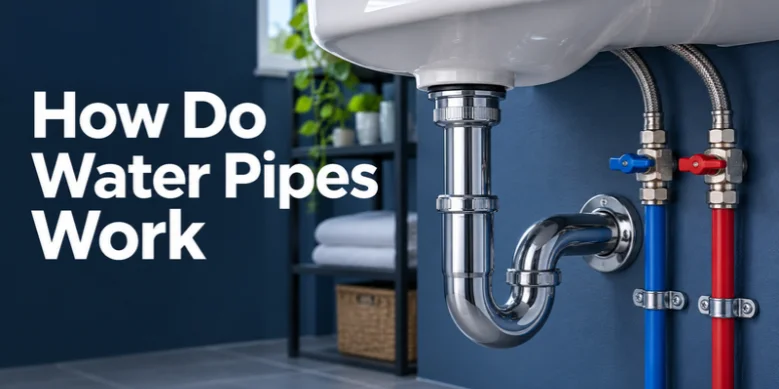
Turn on a faucet, and clean water appears within seconds. Understanding how do water pipes work becomes easier once you separate supply plumbing from drainage. One system brings clean water in, while another carries used water away.
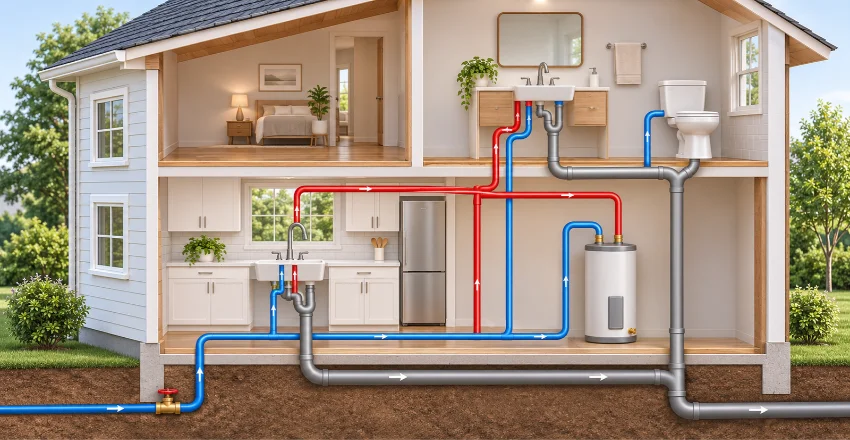
Water reaches your home under pressure from a public system or private well. Inside, supply lines carry cold water directly to fixtures and send some water through a heater. Drain pipes then use gravity, traps, and vents to move wastewater safely toward a sewer or septic system.
Water Pipes at a Glance
| Part of the system | Main job | What makes water move? |
|---|---|---|
| Municipal water main | Carries treated water through a neighborhood | Pumps and system pressure |
| Service line | Connects the public main to a house | Water pressure |
| Cold-water lines | Supply fixtures and appliances | Water pressure |
| Hot-water lines | Carry heated water to fixtures. | Water pressure |
| Fixture valves | Start, stop, or control flow | User-controlled valve |
| Drain pipes | Carry wastewater away. | Gravity |
| P-traps | Block sewer gases. | Water seal |
| Vent pipes | Balance air pressure in drains. | Airflow |
| Building sewer | Connects house drains to sewer or septic system | Gravity |
Key Takeaways
* Clean water and wastewater travel through separate pipe networks. * Supply plumbing works mainly because the water remains under pressure. * Cold water branches toward fixtures and the water heater. * Drainage depends mainly on gravity and correctly sloped pipes. * P-traps keep sewer gases from entering living spaces. * Plumbing vents help drains flow while protecting trap seals. * Shutoff valves let homeowners stop water during leaks or repairs.
How Do Water Pipes Work From the Street to Your Faucet?
For most U.S. homes connected to public water, the journey starts far beyond the property. Utilities collect water, treat it, store it, and distribute it through buried mains. The EPA says roughly 90% of Americans receive drinking water through public water systems.
Treatment methods vary according to the water source and local conditions. Common processes include filtration and disinfection before water enters the distribution network. The CDC explains that utilities may also use coagulation, sedimentation, and other treatment stages.
A smaller service line branches from the public main toward your property. Water then passes through equipment that may include a meter and main shutoff valve. From there, the household distribution system takes over.
Municipal pumps and elevated storage can create the pressure needed for distribution. Water towers can also use gravity to maintain useful pressure across a community. Private well systems usually rely on an electric pump and pressure tank instead.
Why Water Pressure Matters
Water pressure provides the force that moves clean water around your house. It allows water to travel horizontally and reach fixtures on upper floors. Without adequate pressure, showers and faucets would have weak flow.
Pressure also explains why a damaged supply line can leak quickly. The water remains ready to move whenever a valve opens or a pipe fails. This differs from drain plumbing, which normally isn’t kept under constant pressure.
Excessive pressure can place unnecessary stress on fixtures, connections, and appliances. Some homes therefore use a pressure-reducing valve near the main supply. A plumber can test pressure when you notice repeated leaks or unusually forceful flow.
Low pressure can have several possible causes. A partially closed valve, mineral buildup, a failing pressure regulator, or a leak may restrict flow. Problems affecting the neighborhood water system can also reduce pressure temporarily.
How Cold and Hot Water Lines Work
Once water enters the house, the cold supply branches to different fixtures. Toilets, outdoor faucets, refrigerators, and other equipment may use cold water directly. Fixtures such as sinks and showers commonly receive both hot and cold supplies.
Another branch carries cold water into the water heater. The heater raises its temperature and sends it through a separate hot-water distribution line. Branches then deliver heated water to faucets, showers, dishwashers, and other connected fixtures.
Opening a faucet simply opens a controlled path for pressurized water. Water travels through the supply line and exits through the fixture. Closing the faucet blocks that path while the upstream pipes remain pressurized. Hot water may take several seconds to reach a distant fixture. Water sitting inside the pipe must leave before newly heated water arrives.
Long pipe runs can therefore increase both waiting time and wasted water. Home systems vary by building age, region, and local plumbing requirements. Copper, PEX, CPVC, and other approved materials may appear in residential supply systems. Local codes determine which materials and installation methods are acceptable.
For broader property-maintenance topics, readers can also explore Magazinted’s Home Improvement section. Understanding connected home systems can make routine maintenance easier to plan. It can also help you describe problems more clearly to contractors.
How Drain Pipes Carry Used Water Away
Supply plumbing solves only half of the job. After water enters a sink, shower, washing machine, or toilet, it becomes wastewater. A separate drainage network must move that water away from the building. Unlike pressurized supply lines, household drains normally depend on gravity. Drain pipes have a slight downward slope that encourages wastewater to keep moving.
Smaller fixture drains eventually join larger branch drains and the main building drain. The building drain then connects to a public sewer or private septic system. Wastewater continues toward treatment or on-site processing after leaving the house. The exact arrangement depends on the property and local infrastructure.
This separation between potable supply and wastewater is fundamental. Clean water shouldn’t share a pathway with sewage or contaminated drainage. Fixtures and approved plumbing connections keep those systems apart during normal operation.
What P-Traps and Plumbing Vents Do
Look beneath many sinks, and you’ll see a curved section of drain pipe. This fitting is commonly called a P-trap because of its shape. It holds a small amount of water after the sink finishes draining. That standing water creates a barrier between the room and the sewer system. Without the seal, unpleasant sewer gases could travel backward through the fixture opening.
A rarely used drain can develop odors if its trap dries out. Vent pipes solve a different problem involving air movement. As wastewater moves through a drain, air must enter or leave the piping system. Proper venting helps prevent pressure changes that could interfere with drainage.
Vents also help protect the water sitting inside fixture traps. Poor venting can contribute to slow drainage or unusual gurgling sounds. Plumbing vent problems should usually be evaluated by a qualified professional.
What Happens When You Flush a Toilet?
A toilet combines pressurized supply plumbing with gravity drainage. The supply line fills the tank or prepares the flushing system for its next use. A valve keeps that incoming water controlled until needed. Flushing releases stored water into the bowl and starts a rapid drainage action. Wastewater moves through the toilet’s built-in trap and into the drain system.
It then joins larger waste pipes leading away from the house. Many residential toilets refill the tank after a flush. A fill valve stops incoming water once the correct level returns. This cycle repeats whenever the toilet operates normally.
Where Are the Most Important Shutoff Valves?
Every homeowner should know where the main water shutoff is located. Closing it can stop incoming water during a major supply leak. Its location varies by home, climate, and construction style. Many fixtures also have individual shutoff valves. You may find them beneath sinks and near toilets or connected appliances. These valves can isolate one fixture without shutting water off everywhere.
Learning their locations before an emergency can save valuable time. Labels can help other household members find the main valve quickly. Don’t force a valve that appears seized, damaged, or heavily corroded. Home maintenance works best when several systems receive regular attention.
Magazinted’s guide to HVAC repair and maintenance covers another major household system. The same preventive mindset can reduce unexpected plumbing problems.
Common Signs Your Plumbing Needs Attention
Changes in normal plumbing behavior often provide useful warning signs. A sudden pressure drop, unexplained water sounds, damp surfaces, or staining may indicate leakage. Slow drains and recurring backups point toward drainage problems instead.
Watch your water bill for unexplained changes in consumption. A toilet that keeps running or a concealed supply leak can increase usage. Your water meter may also provide clues when every fixture is turned off. Gurgling drains, recurring sewer odors, or several slow fixtures can suggest a larger drainage issue. Problems affecting multiple fixtures often extend beyond a single sink trap.
Avoid repeatedly treating serious blockages with harsh chemicals without identifying their cause. Visible corrosion also deserves attention, especially around older fittings and valves. Dampness near a water heater or supply connection should be investigated promptly. Early repairs can limit water damage to floors, walls, and cabinets.
Similar preventive thinking applies elsewhere around the property. Magazinted’s article about upgrading or replacing a garage door explains how aging components affect performance. Home plumbing also benefits from addressing wear before complete failure.
When Should You Call a Plumber?
Some homeowner tasks are straightforward, such as locating shutoff valves or cleaning a removable faucet aerator. Other situations require training, permits, specialized equipment, or knowledge of local codes. Major leaks and sewer backups generally deserve professional attention.
Call for help when water is damaging the building, or you cannot identify the source. Repeated drain backups, suspected hidden leaks, and significant pressure problems also justify professional diagnosis. Shut off the affected water supply first when doing so is safe.
Pipe replacement and major alterations should follow local plumbing rules. Requirements can vary between U.S. states and municipalities. A licensed local plumber can identify the standards applying to your property.
Frequently Asked Questions
How do water pipes work in a house?
How do water pipes work inside a house depends on two separate systems. Pressurized supply lines bring clean water to fixtures, while sloped drain lines carry wastewater away. Valves, traps, vents, and a water heater support those two main networks.
How does water travel uphill through household pipes?
Pressurized water can move upward because pressure provides energy against gravity. Municipal pumps, elevated storage, or a private well pump create that pressure. The available pressure decreases as water encounters elevation changes and resistance.
Why doesn’t water flow constantly from a faucet?
A faucet contains a valve that blocks the outlet when closed. Water may remain pressurized behind that valve without leaving the fixture. Turning the handle opens a path and allows water to flow.
Do drain pipes have water pressure?
Most household drain lines aren’t pressurized like clean-water supply lines. They rely mainly on gravity, pipe slope, and proper venting. Certain special systems can operate differently, but gravity drainage is common in U.S. homes.
Why is there water inside the curved pipe under my sink?
That curved fitting is usually a P-trap. It intentionally retains enough water to create a seal against sewer gases. A dry or leaking trap can allow unpleasant odors into the room.
How can I tell whether a problem affects supply pipes or drains?
Supply problems often involve leaks, low pressure, or unexpected running water. Drain problems more often cause slow emptying, backups, gurgling, or sewer odors. A plumber can diagnose symptoms that don’t clearly fit either group.
The Simple Way to Think About Home Plumbing
Home plumbing makes more sense when you picture two networks working side by side. Pressure moves clean water toward fixtures, while gravity carries wastewater in the opposite direction. Valves, traps, vents, and heating equipment make those flows safe and controllable.
Knowing the basics helps you recognize trouble before damage becomes severe. Start by finding your main shutoff and watching for changes in pressure, drainage, or water use. For major leaks, repeated backups, or pipe alterations, contact a qualified local plumber.
