


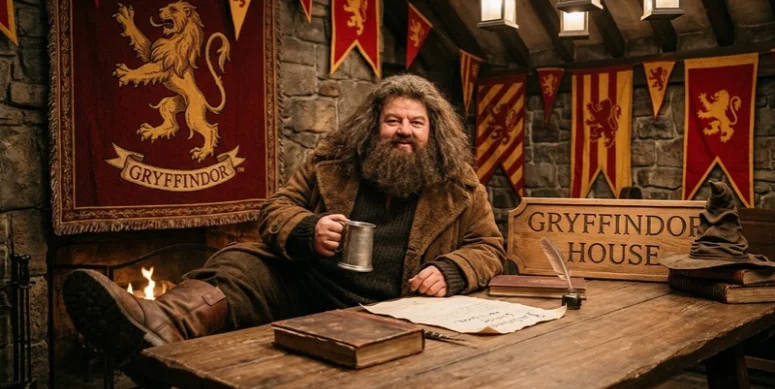
What House Was Hagrid In? Rubeus Hagrid belonged to Gryffindor House while attending Hogwarts School of Witchcraft and Wizardry. The books and movies never directly identify his former house. Official Harry Potter material, however, confirms that he was a Gryffindor.
Direct answer: Hagrid was in Gryffindor during his years as a Hogwarts student. His house is not directly named in the novels or films. Official Harry Potter sources identify Gryffindor as his house. His courage, loyalty, and willingness to face danger also fit several qualities associated with Gryffindor.
| Key fact | Answer |
|---|---|
| Hogwarts house | Gryffindor |
| Full name | Rubeus Hagrid |
| Hogwarts status | Former student |
| Year expelled | Third year |
| Person who framed him | Tom Riddle |
| Creature he secretly kept | Aragog, an Acromantula |
| Later Hogwarts job | Keeper of Keys and Grounds |
| Later teaching role | Care of Magical Creatures professor |
| Canon status of house | Officially confirmed |
| Stated directly in books? | No |
Fans often remember his loyalty, warmth, and love of creatures before thinking about his school days. Those traits can make another house seem possible. His actual placement, however, is settled by official franchise material.
What House Was Hagrid In at Hogwarts?
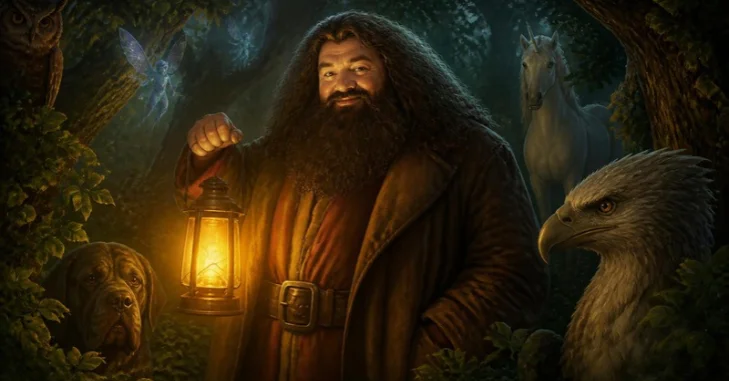
The answer to what house was Hagrid in is Gryffindor. The official Harry Potter encyclopedia lists Gryffindor under his character information. Official franchise features have also described him as a former Gryffindor student.
That detail never becomes an important plot point in the seven main novels. Harry therefore never receives a dramatic explanation of his friend’s old house. Movie viewers receive even fewer details about the character’s school years.
This omission explains why the question remains surprisingly common among fans. Readers know he attended Hogwarts long before Harry arrived. They also know that his education ended under unusual and unfair circumstances.
Why Gryffindor Makes Sense for His Character
Gryffindor traditionally values courage, nerve, determination, and a willingness to confront danger. The half-giant displays those qualities throughout the Harry Potter story. He repeatedly enters situations that most witches and wizards would avoid.
His attitude toward dangerous creatures provides one clear example. Dragons, giant spiders, Hippogriffs, and other intimidating animals rarely frighten him. His confidence sometimes becomes reckless, but fear seldom controls his decisions.
He also demonstrates personal courage when protecting people close to him. He remains loyal to Harry and Albus Dumbledore during dangerous periods. That commitment continues even when Voldemort’s return makes association with them risky.
Readers exploring more film, television, and character stories can browse Magazinted’s entertainment coverage. The section includes profiles, movie features, and popular-culture explainers. That makes this Harry Potter question a natural fit for the site’s entertainment audience.
Was His House Ever Mentioned in the Harry Potter Books?
His former Hogwarts house is not explicitly identified in the main novels. Readers can learn considerable information about his childhood and expulsion. They never receive a straightforward scene saying that he belonged to Gryffindor.
That distinction matters when discussing Harry Potter canon. Something can be official without appearing directly within the seven novels. Supplemental franchise material has filled several similar gaps over the years.
A 2000 online chat with J.K. Rowling also addressed the question directly. When asked about his house, Rowling answered that he was in Gryffindor. Later official Harry Potter material continued using the same classification.
The books still provide enough personality evidence to make Gryffindor believable. He values bravery and shows strong resistance to intimidation. His actions often reflect instinctive courage rather than careful self-preservation.
Why Do Some Fans Think He Was a Hufflepuff?
Hufflepuff remains the most popular alternative theory because several traits appear to fit. The house values loyalty, fairness, patience, and hard work. The Hogwarts gamekeeper demonstrates many of those qualities throughout the series.
He is intensely loyal to the people he trusts. He works hard caring for the school grounds and its creatures. He also gives unusual animals more patience than almost anyone else would offer.
That similarity does not make him a Hufflepuff in official canon. Hogwarts houses do not require students to possess only one set of traits. Characters frequently display qualities associated with several houses.
That overlap is part of what makes house discussions entertaining. Fans often sort favorite fictional characters differently based on the qualities they value. Magazinted readers who enjoy nostalgic character discussions may also like this guide to cartoons from the 90s and early 2000s.
When Did Hagrid Attend Hogwarts?
Rubeus entered Hogwarts decades before Harry Potter became a student. His school years overlapped with those of Tom Riddle. Riddle would eventually become Lord Voldemort.
The two students had dramatically different relationships with the magical world. One became fascinated with dark magic and power. The other developed a lifelong fascination with magical creatures.
Their paths became permanently connected during the opening of the Chamber of Secrets. Riddle needed someone else to receive blame for the attacks. The creature-loving third-year student became a convenient target.
Why Was He Expelled From Hogwarts?
The future gamekeeper was expelled during his third year at Hogwarts. He had secretly been raising Aragog, a giant Acromantula. Keeping such a dangerous creature inside the school understandably created serious concerns.
Aragog was not the monster attacking Hogwarts students, though. The actual creature was the basilisk hidden inside the Chamber of Secrets. Tom Riddle controlled the basilisk as the Heir of Slytherin.
Riddle framed his fellow student by presenting Aragog as the responsible monster. School authorities accepted the accusation and expelled the innocent student. His wand was broken following the decision.
Albus Dumbledore did not believe the accusation was proven. He helped ensure the expelled student could remain at Hogwarts as an employee. That decision eventually gave Harry one of his most dependable adult friends.
Was Hagrid the Heir of Slytherin?
No, he was never the Heir of Slytherin. Tom Riddle held that connection through his ancestry from Salazar Slytherin. Riddle opened the Chamber and controlled the basilisk within it.
The accusation against the Gryffindor student worked because he already kept a frightening creature secretly. Adults could easily imagine Aragog causing the attacks. Riddle exploited that circumstance to protect himself.
The truth emerges more clearly during Harry Potter and the Chamber of Secrets. Harry and Ron eventually follow the spiders and meet Aragog. The encounter reveals important information about the earlier attacks.
Did He Finish His Magical Education?
He never completed a normal Hogwarts education after being expelled. Losing his place at the school also restricted his formal magical training. His broken wand became a lasting reminder of what happened.
Despite that history, he retained some magical ability. His pink umbrella is strongly associated with the remains of his wand. The series deliberately leaves some details about its magical construction unexplained.
He later returned to the classroom from the opposite side. Dumbledore appointed him professor of Care of Magical Creatures. His expertise came largely from years of direct work with magical animals.
That teaching position also carries emotional significance. Hogwarts once removed him as a student because of an accusation involving a creature. Years later, the school trusted him to teach students about magical creatures.
How Gryffindor Connects Him With Harry
Harry also belongs to Gryffindor, creating an understated connection between the two characters. Their friendship starts before Harry even sees Hogwarts. The half-giant introduces him to the magical community.
Their shared house is rarely emphasized because their relationship does not depend on house loyalty. He supports Harry because he cares about him personally. That bond is stronger than any school competition.
This also separates him from several adults who remain deeply attached to Hogwarts rivalries. He rarely treats students according to house stereotypes. His experiences may have given him a broader perspective on belonging.
Harry Potter continues reaching new generations through books, films, games, and television adaptations. Readers following the companies behind major entertainment franchises can also read Magazinted’s David Zaslav profile. It covers Warner Bros. Discovery and its place within American entertainment.
Gryffindor Traits He Shows Throughout the Series
Several recurring behaviors make the official sorting easier to understand:
- Courage: He regularly handles creatures that would terrify most people.
- Loyalty: He remains committed to Harry and Dumbledore through serious danger.
- Daring: He takes risks that sometimes exceed sensible caution.
- Protectiveness: He puts himself in danger when friends need help.
- Defiance: He resists people who threaten Hogwarts or those he cares about.
- Persistence: His expulsion never destroys his connection with the magical world.
These qualities do not mean every decision he makes is wise. Gryffindor courage sometimes overlaps with impulsiveness throughout the series. His fascination with dangerous animals repeatedly demonstrates that combination.
Nor does his sorting erase his Hufflepuff-like characteristics. Loyalty and kindness remain central parts of his personality. Hogwarts houses describe priorities and tendencies rather than rigid personality categories.
What Happened to Him After His Expulsion?
Remaining at Hogwarts allowed him to build a life around the school. He eventually became Keeper of Keys and Grounds. He lived in his cabin near the Forbidden Forest with Fang.
His responsibilities expanded during Harry’s years at Hogwarts. He became the Care of Magical Creatures professor after Silvanus Kettleburn retired. Teaching gave him a role he could never have expected after his expulsion.
He also joined the Order of the Phoenix during the conflict with Voldemort. His physical strength and loyalty made him valuable during dangerous missions. He remained closely connected with Harry throughout the war.
The Final Answer
So, what house was Hagrid in during his Hogwarts years? He was officially a Gryffindor, despite popular Hufflepuff theories. That answer is supported by official franchise material and Rowling’s earlier comments.
His school history also explains why the detail can be easy to miss. His education ended during his third year after Tom Riddle framed him. The main books focus more heavily on that expulsion than his original sorting.
His later life gives the Gryffindor placement added meaning. He repeatedly shows bravery, loyalty, and readiness to confront danger. Those qualities remain visible from Harry’s first meeting with him through the final conflict.
Frequently Asked Questions
What house was Hagrid in before he was expelled?
He was a member of Gryffindor House before his third-year expulsion. Official Harry Potter sources confirm this placement. The novels themselves never directly identify his student house.
Was Hagrid in Hufflepuff?
No, official canon places him in Gryffindor rather than Hufflepuff. Fans often suggest Hufflepuff because he is loyal and hardworking. Those characteristics can belong to people outside Hufflepuff too.
Why was Hagrid expelled?
He was blamed for attacks connected with the Chamber of Secrets. Tom Riddle used the discovery of Aragog to frame him. The basilisk controlled by Riddle was responsible for the attacks.
Did Tom Riddle attend Hogwarts at the same time?
Yes, their time at Hogwarts overlapped. Riddle was the student who exposed Aragog and blamed its owner. He later became the dark wizard known as Lord Voldemort.
Is Hagrid’s Hogwarts house mentioned in the movies?
The films do not directly state his former house. Much of his early school history receives limited screen time. Supplemental official material supplies the clear Gryffindor answer.
Why does Hagrid seem like a Hufflepuff?
He displays loyalty, kindness, patience, and dedication to his work. Those qualities are strongly associated with Hufflepuff. His courage and daring still make Gryffindor a believable official placement.
